Tuesday, 17 March 2015

Tzvetan Todorov - Narrative theory


Todorov proposes an interesting narrative theory as summarised below: 
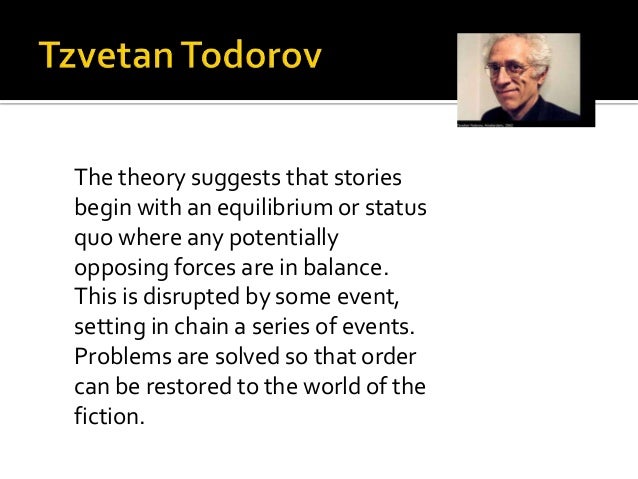
Our media trailer purposely challenges this theory of narrative. Our trailer begins with no equilibrium, as the male character is dominating the female character through his control and violence. This means that the opposing forces aren't in balance and never were. 
Our storyline then fails to be disrupted by an event as the female character fails to speak out about the domestic violence she is experiencing along with the past victims. 
Ultimately, although it is only a short teaser trailer, the audience get the impression that the problem is not resolved either, due to the final shot of the female character being held underwater.

Sunday, 15 March 2015

Blumler and Katz - Uses and Gratification Theory


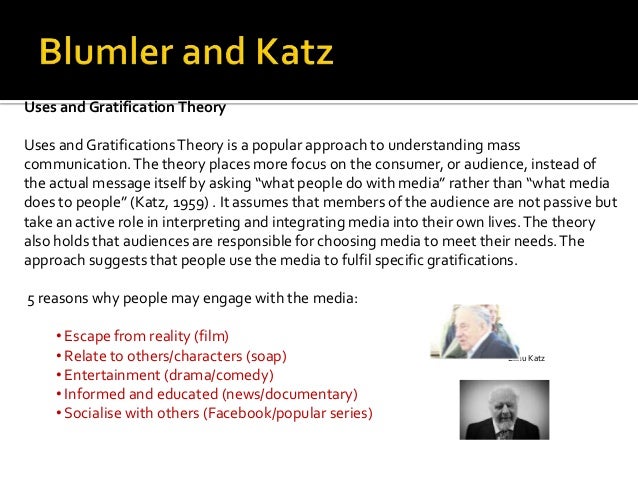
Below is the Uses and Gratification Theory by Blumler and Katz:
When considering why I think an audience may choose to view 'White Ribbon' I felt that there were two main reasons. 
Firstly, I felt that an audience may choose our media text in order to be informed and/or educated. For example, they may know someone suffering from domestic violence, and so they may view 'White Ribbon' in order to find out more information regarding how to help victims and to allow them to further understand their situation. Secondly, I feel that an audience may be inclined to view our media text to achieve Escapism. This seems an unlikely reason for an audience to choose a film based on domestic violence, however, if they themselves are victims then they may find it an escape from reality to see how a fictional character would react in a similar situation to their own. 

Saturday, 14 March 2015

Media Theorist - Laura Mulvey

Whilst considering our storyline and the message we are trying to portray through our trailer, it reminded me of a key media theorist - Laura Mulvey. The following slide explores her ideas:

I feel that, in a way, our trailer does comply with this theory, in the respect that it is displaying violence against women and therefore placing women in a subordinate position. This may be viewed as displaying a sexist viewpoint, however, we have been careful to ensure that we display the violence from both the female and male perspective to ensure our trailer in not entirely portrayed 'at a male angle'.For example, we have used frequent shots of our lead female character on her own as well as our lead male character.
Furthermore, we have been mindful not to over sexualize the female characters in our trailer (e.g- through displaying sexual scenes) as this may cause viewers to take the message of domestic violence less seriously and may legitimate the use of women as 'sexual objects' in media text.

Wednesday, 11 March 2015

Making our final trailer a teaser trailer

We decided to make our final trailer a teaser trailer not a theatrical trailer. This is mainly due to the fact that our trailer lacked speech and could tell the story without the need for it. Therefore, we felt that choosing to do a teaser trailer gave us more opportunity to entice the audience by using our best shots and simple piano music to leave them intrigued and wanting to know more.

Tuesday, 10 March 2015

Tuesday, 3 March 2015

Final Poster


We finalised our decision on using this image for our poster. We decided to use a black and white colour scheme as it reflects the mood of the trailer and may be more eye catching to our audience as it is different to the typical conventional colour scheme of many film posters. The black and white also creates focus on the main elements of the picture and their outline, (James, the building and the bird).